
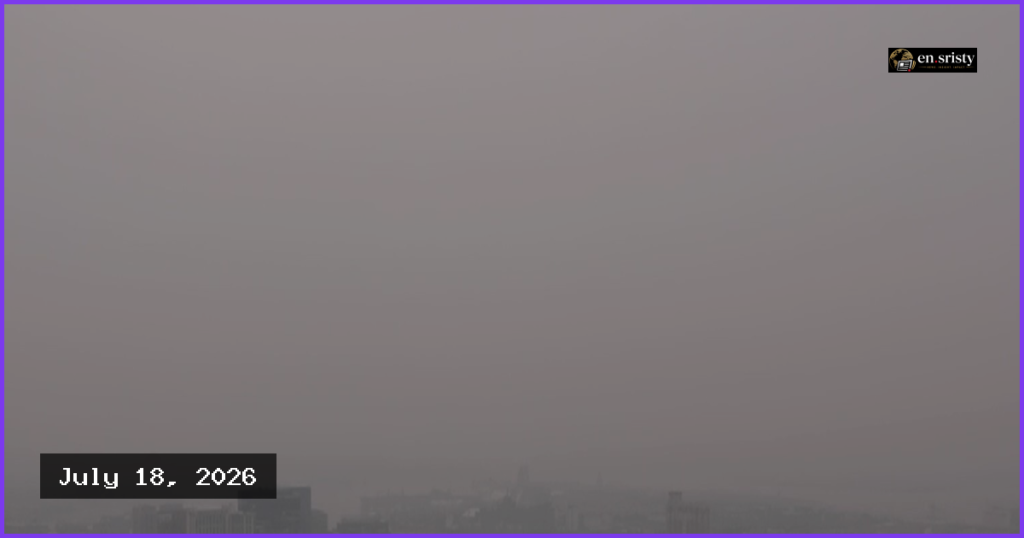
On Friday, July 17, 2026, U.S. President Donald Trump threatened to impose additional tariffs on Canada, blaming the northern neighbor for failing to contain wildfires that have sent thick smoke blanketing large areas of the American Midwest and East Coast. Writing on his social media platform, Truth Social, Trump accused the Canadian government of "Willful Negligence" in managing its wilderness areas.
"We are holding Canada responsible for the fact that they are not properly maintaining their Forests, and Brush therein, and the United States is being unnecessarily invaded by filthy, polluted, and unhealthy air, the quality of which is dangerous, and totally unacceptable!" Trump wrote. He declared that the ongoing air quality issues are "costing the United States Billions of Dollars," asserting that the "cost of this pollution must of necessity be added to the TARIFFS Canada is currently paying." The president added that he intends to address the dispute directly with Canadian Prime Minister Mark Carney.
In response to the threats, Carney's office pointed to a statement from Eleanor Olszewski, Canada's Minister of Emergency Management. Olszewski emphasized that Canada is "working with urgency alongside provincial and territorial partners" and highlighted that the country has invested billions of dollars in forest fire prevention over recent years. "Canada and the United States have a long history of working together to fight wildfires on both sides of the border — it is a history that both countries benefit from and that we are building on during this challenging wildfire season," Olszewski stated, noting that Canadian firefighters previously assisted with the Los Angeles wildfires last year.
The tariff threat comes despite recent praise from U.S. Ambassador to Canada Pete Hoekstra, who earlier in the week commended the "outstanding cooperation between the United States and Canada" in tackling the "shared challenge" of wildfires. However, on Friday, Hoekstra shared Trump's social media post criticizing the Canadian administration.
Trump's warning aligns with mounting pressure from several Republican lawmakers. This week, four GOP representatives from Michigan—John James, Lisa McClain, John Moolenaar, and Jack Bergman—sent a joint letter to Carney declaring that "our patience has run out." The lawmakers criticized Canada for what they described as "chronic under-investment in forest thinning, fuel reduction, and prescribed burns." They wrote, "This is the third consecutive year we have had to write to Canadian officials about a crisis that Canada has the tools to prevent and has chosen not to," adding that their constituents "are breathing the consequences of this failure right now, and they deserve better than to be told, again, that it will be handled."
Other Republicans have also demanded action. Ohio Senator Bernie Moreno floated the idea of imposing sanctions on Canada, while Representative Nick Langworthy of upstate New York posted on X that "there should be consequences" if Canada does not take "meaningful action" to prevent future blazes.
In a brief address on Thursday, Carney countered the congressional criticism by highlighting the role of climate change in driving extreme weather events, while chiding the United States for pulling back from clean energy initiatives. "Fighting climate change is the responsibility of all countries, including the United States," Carney told reporters.
Doug Ford, the Premier of Ontario—a province currently battling out-of-control wildfires—offered a more blunt response on Friday. "I truly believe the Americans are good neighbors," Ford said. "If there's some politicians out there chirping away, well, maybe what you should do rather than complain is send support, send help, because we have done the exact same thing for our American friends."
This latest flare-up adds to an already strained relationship between Trump and Canada, which has seen persistent friction over trade disputes, NATO commitments, a disagreement regarding a Detroit-area bridge, and Trump's previous threats to absorb Canada as the 51st U.S. state.