The Antonine Fountain: A Glorious Tribute to Dionysus
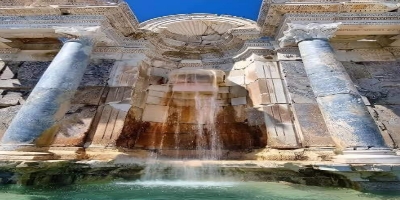
The Antonine Fountain, A Glorious Tribute to Dionysus. In the ancient city of Sagalassos, nestled in mountains of southern Turkey, stands a masterpiece of Roman engineering and artistry: the Antonine Fountain.
Built between 160-180 AD. this majestic structure was dedicated to Dionysus, the god of wine, revelry, and fertility. For centuries, the fountain was a symbol of life and abundance, its waters flowing from a spring high above, cascading down into the heart of the city where citizens gathered to celebrate, socialize, and worship.
Stretching 28 meters long and rising 9 meters high, the Antonine Fountain was an architectural marvel, its grandeur visible from nearly every corner of the ancient city.
The fountain’s intricate design, with its carved stone figures and reliefs, reflected the power and influence of the Roman Empire.
Columns adorned with Corinthian capitals stood proudly on either side of the fountain, framing its central arch, where a statue of Dionysus once presided over the flowing waters, symbolizing the god’s blessings on the city.
The water, sourced from a spring some 200 meters above, was an engineering feat of its time. Channeled through aqueducts and pipes, it made its way to the fountain, where it spilled into a grand basin, providing clean water to the citizens of Sagalassos.
The sound of the water flowing would have echoed through the city, a constant reminder of the life-giving force that Dionysus, and the gods of Rome, bestowed upon them.
For the people of Sagalassos, the Antonine Fountain was more than just a practical source of water. It was a place of social gathering, where merchants, farmers, and travelers could meet and share stories.
Festivals honoring Dionysus would fill the air with music and laughter as the citizens drank wine and paid homage to the god whose presence was felt in every drop of water that flowed from the fountain.
Though the city of Sagalassos eventually fell to ruin, the Antonine Fountain remained a lasting testament to its golden age. Rediscovered by archaeologists, its restored columns and carefully reconstructed basins still echo the splendor of its former glory.
Even today, as the water from the ancient spring continues to flow, the Antonine Fountain stands as a reminder of the skill, artistry, and devotion of the Roman world—a symbol of abundance and the enduring legacy of a city that once flourished under the watchful eye of Dionysus.